Rotarians often work with a community to establish a program for young children. These can start in the first year of a child’s life, when family members are invited to participate. The previous articles in this series have focused on understanding child development. Who are these little people? How can we integrate knowledge of holistic children’s brain development into a rich learning environment? How can we help parents do the same at home?
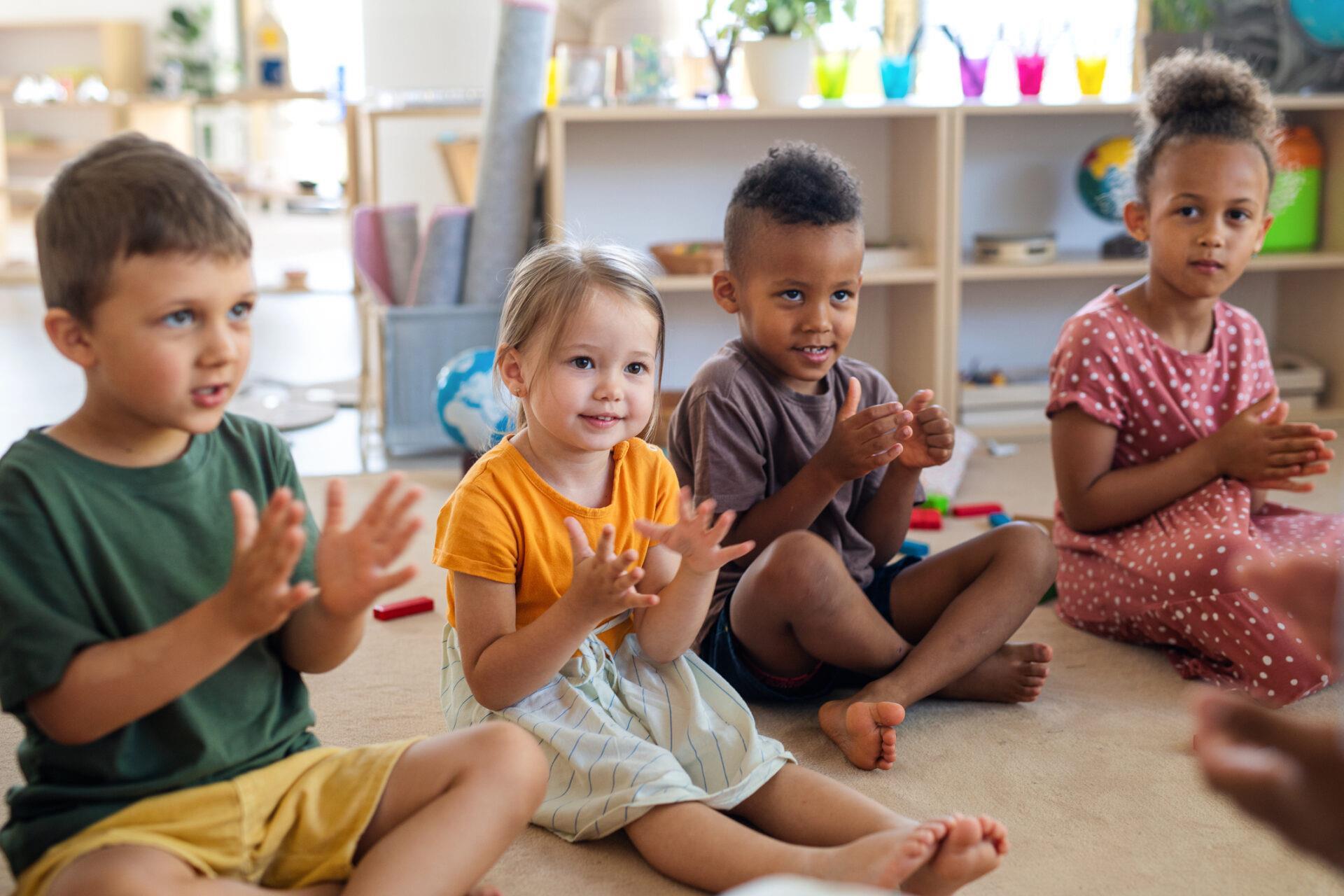
This article will provide ideas to help the community and/or educators plan programs appropriate for young children. For many children, play is not frequent in these settings. But what if educators used the freedom of playtime to let children invent, make choices, challenge their own thinking, and apply their knowledge to new situations independently? What if parents were invited to participate and observe what their children are learning and how? What if teachers knew how to carefully observe what knowledge and skills children are transferring to their play? How would this change their classrooms and the learning opportunities for young children? How would this enrich the community?
The value of play in an early years program is often questioned as educators pursue more academically oriented, teacher-directed lessons. But play is how young children learn. The term "educator" in this article refers to whoever is working with the children. It may be a teacher, a parent, a volunteer, or a Rotarian who is helping the community to set up a program.
In Einstein Never Used Flashcards,1 ]the authors Hirch-Pasek and Golinkoff identify five elements in children’s play.
1. Play must be pleasurable and enjoyable. It is easy to see the joy on children’s faces when they are enjoying themselves.
2. Play must have no extrinsic goals. There is no preset learning that should take place, and no expectations to meet. The play itself is what matters. The materials available for the children will dictate some aspects of learning, though.
3. Play is spontaneous and voluntary. Children are choosing to play without being told how. When it is prescribed, the fun is taken out of the activity.
4. Play involves active engagement on the child’s part. The child directs how objects are used, and it often involves interaction with one or a small group of other children. When a child builds a tower of blocks to challenge himself to see how tall it can be made, this is play. When an adult tells a child to build a tower with 5 blocks and records that number, it is not considered play; it is a lesson.
5. Play involves an element of make-believe. Through play, a child can create a car from an empty water bottle and develop a scenario in which they are traveling. Sticks sitting upright in a pail of sand suddenly become a birthday cake, and it is time to imagine blowing out the candles.
Play has been described as children's independent work. They are free to use their imaginations to create scenarios that require specific vocabulary, and they may learn to understand certain societal roles and develop empathy. They may choose to play the role of parents as they care for their baby in the Home Center, or learn the importance of a doctor's appointment. Taking a ‘child’ to the doctor may help them to realize that there is nothing to fear, as they play the role of doctor, nurse, or parent. When playing, children will spontaneously and appropriately apply what they know and understand as they create their own scenarios. When they have a little pad of paper, they can write out a prescription or pretend to have the doll’s sore throat checked with a popsicle stick. These activities help to develop vocabulary, emotional and social skills, and problem-solving as they use an item (a popsicle stick) to represent another (a doctor’s wooden stick).
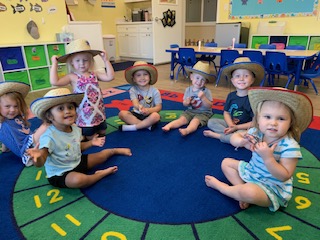
Play is closely tied to social development. We know that the early years are critical in developing positive, appropriate social skills, and early years programs can plan positive, enriching opportunities for learning through play. It also provides opportunities for children to see the importance of regulating their own behavior.
Stages of play:
- The child does not play but watches to see if anything is of interest
- The child plays alone and does not make any effort to speak or interact with other children
- The child watches other children play and may talk to others. The child does not enter the play, though.
- Children play in the same vicinity but with their own materials.
- Children play together but do not cooperate and plan out the play.
- Children are playing together with a purpose and goal in mind.
These stages can depend on the child's facility with language, their experience and familiarity with others, or their emotional state. Educators should look for patterns of behavior over time to understand the child's particular needs.
Role of the Educator in Play
The educator is responsible for creating a safe and nurturing space
that provides optimal learning for all the children. It changes as children age and develop. Close observations of children’s needs ensure that the materials available to them will help them advance their skills. Educators are responsible for:
- Facilitating learning: It is important for educators of young children to learn about child development and plan activities accordingly. If the educator believes that knowledge is transferred from an adult to a child, they will focus on planning formal lessons and imparting knowledge to the children in this way. If they believe that children learn through experiences, then the adult will set up a variety of open-ended learning opportunities that will challenge children to use the materials in a variety of ways, using appropriate language to plan the play together.
- Planner: Educators should plan materials to facilitate learning. It is also important to plan short, specific opportunities to teach broader topics such as mathematics or literacy skills, followed by independent, authentic opportunities to put these new skills into practice. This can be as simple as providing paper and writing tools for children to make the sign for the hospital in whatever way the children are ready. Even just an H demonstrates learning.
- Observer: While at play, children provide a multitude of opportunities for the teacher to observe what they know, how they socialize with others, how they solve problems, their level of language development, and more. The child who spontaneously records HOP while making a sign for the class hospital has demonstrated much more than the child who completes a phonics worksheet where he mistakes a horse for a donkey, and it is recorded as an error. Teachers should develop a system to record what they learn about the children throughout the day.
Using the knowledge provided here, along with accessible professional information, Rotarians can make a lasting improvement to programs for young children. It will be important to share the learning, collaborate with the educators, and help create an equipped and engaging environment with simple yet appropriate learning materials. Learning in the early years sets the foundation for children’s lifetime.
[1] Hirsh-Pasek,K.: Michnick Golinkoff,R. Einstein Never Used Flashcards. Emmaus, PA: Rodale, Inc. 2003. p.210